
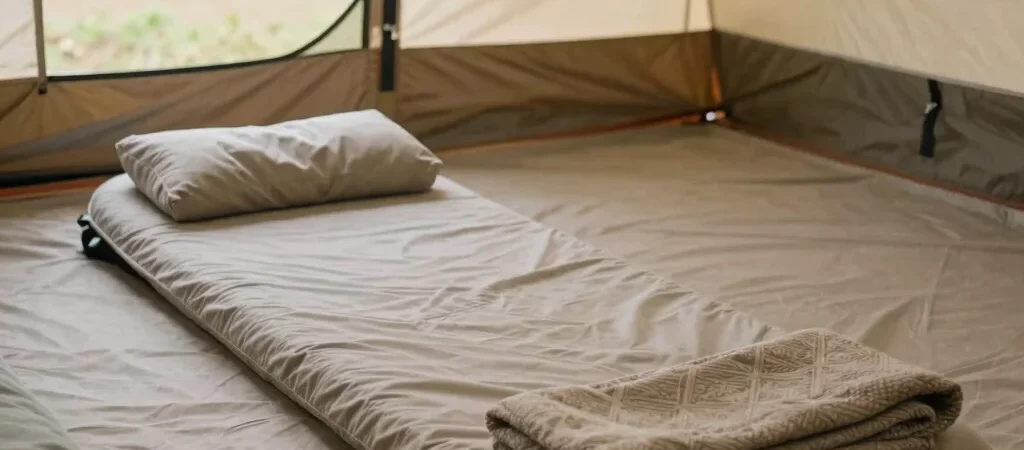
A roomy tent can make camp feel organized, but it cannot smooth out a lumpy pad or keep a sleep system from feeling cold against the ground. When comfort is the goal, start with the surface you sleep on and work outward. The right choice depends on your campsite, your sleeping habits, and how much gear you are willing to carry.
Match the surface to camp
A sleeping pad is easy to pack and keeps your setup close to the ground, which can be useful in a smaller tent. A cot creates a more bed-like height, but it takes more room and needs a tent with enough clearance and floor space. Before choosing either, picture the actual site: a level platform, a rocky patch, and a soft forest floor ask different things of your setup.
Check fit before features
Width and length sound unremarkable until your shoulder meets the tent wall or your feet hang beyond the pad. Check the packed dimensions too, especially if the sleep system has to share a trunk with chairs, a cooler, and cooking gear. A review is most useful when it explains how the item fits into a real tent layout, not just what appears on its specification sheet.
Think through the whole night
Comfort depends on how the pad, sleeping bag, and ground work together, so avoid judging one piece of equipment in isolation. On video, a setup can show its size beside a tent wall and how quickly it packs away; written observations can add the details that are harder to see, such as where the setup feels cramped. Start by measuring your tent floor and deciding what you want to carry. Then choose the sleep system that suits those constraints.